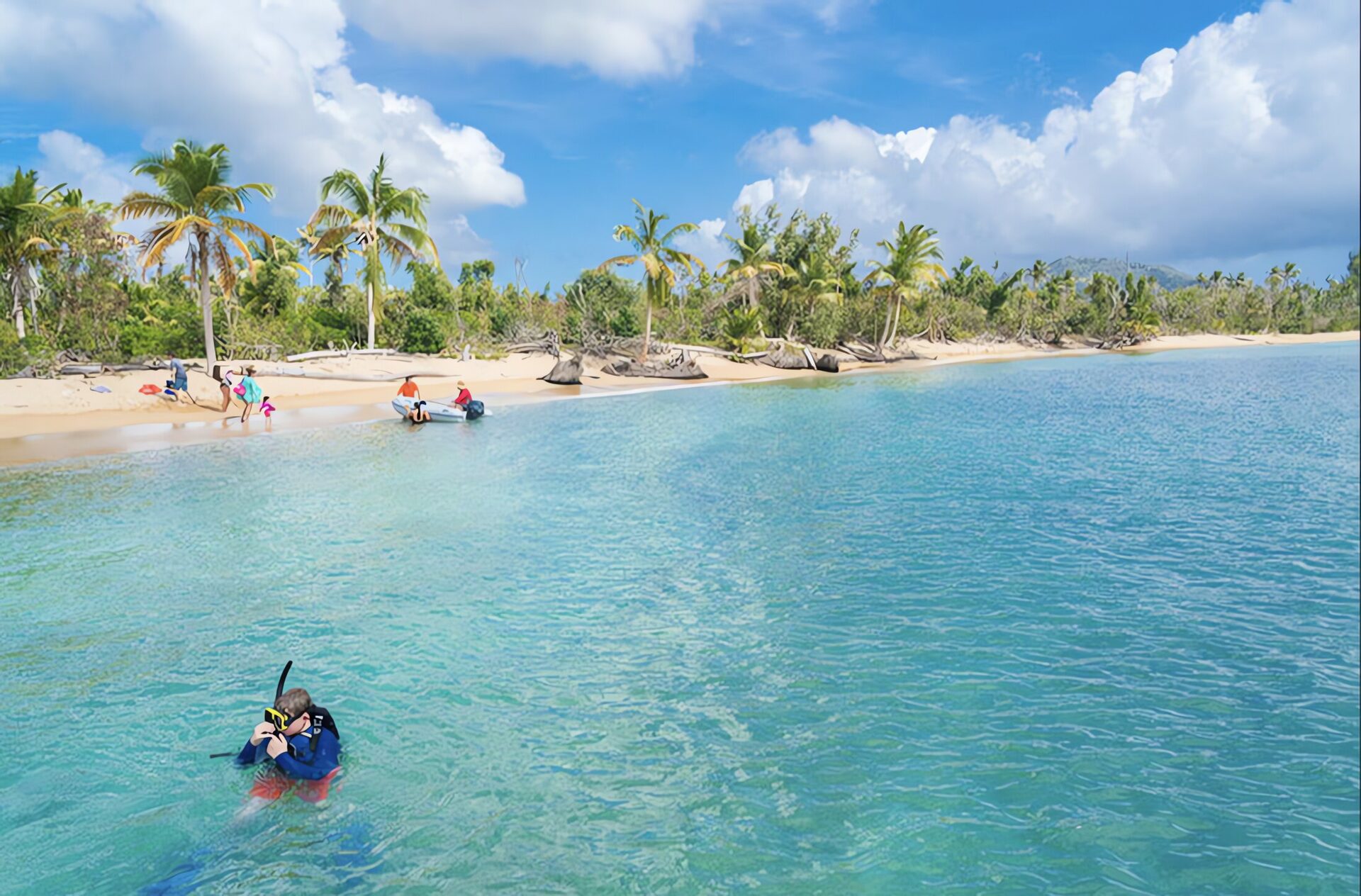
Travelers come to the Caribbean with snorkeling expectations set by the British Virgin Islands, the Bahamas, or Bonaire. Vieques is a real, beautiful snorkel — but it is not those places. Here is what you actually see when you slip the mask on at Punta Arena and what we tell guests to expect realistically.
The quick answer
- Visibility: typically 8–15m at Punta Arena (good Caribbean average).
- Fish species: parrotfish, sergeant majors, blue tangs, occasional barracuda, sea fans, hard coral patches.
- What you will not see: huge reef walls, sharks, manta rays, dramatic coral cathedrals.
- Vs Culebra: similar coral, Culebra slightly better at Carlos Rosario. Vs Bahamas/BVI: less dramatic, but free of crowds.
What the reef looks like
The reef at Punta Arena is a fringing patch reef — coral heads scattered in sand, with channels of grass between. Depth ranges from 1m at the beach edge to 5–6m at the outer patches. It is the kind of reef you swim slowly over, looking down, rather than diving along a wall. Sea fans waving, brain coral mounds, occasional barrel sponges.
Fish you will see, ranked by frequency
- Sergeant majors — yellow-and-black striped, will swarm you if you crumb bread (please do not).
- Blue tangs — bright blue, slow, photogenic.
- Parrotfish — multiple species, biting coral with audible crunch.
- Yellow snappers — schooling in shadows under coral heads.
- Barracuda — solo, hanging mid-water, not dangerous, do not touch.
- Trumpetfish — long, thin, vertical, easy to miss.
What you will not see (managing expectations)
No reef sharks — they exist in PR waters but rarely at the depths we snorkel. No manta rays or whale sharks (too far north). No giant moray eels in plain view (they hide). No turtles guaranteed (we see them on about 1 in 4 trips, not every day). No phosphorescence (that is at night, separate activity). If your snorkel reference is GoPro footage from Sipadan or Raja Ampat, calibrate down.
Reef health honest take
Caribbean reefs have lost an estimated 60-80% of their coral cover since the 1970s. Vieques is healthier than most because the lower development means less pollution and the Vieques National Wildlife Refuge protects large stretches of coastline. But there is bleaching, some dead coral, some algae overgrowth. Expect a real reef in 2026, not a 1970s nature documentary.
Vs other Caribbean snorkel spots
Culebra (Carlos Rosario) — slightly better coral diversity, more crowds. Culebrita — pristine but logistically heavier. St Thomas (Coki Beach) — colorful fish but high traffic. Bonaire — dramatically better walls and visibility (advanced snorkel destination). Vieques is the "easy, uncrowded, decent fish, relaxed" version — great if you want a chill day, less great if your goal is a once-in-a-lifetime reef.
Snorkel tips that actually matter
- Defog your mask with a drop of baby shampoo or spit before entering water.
- Reef-safe sunscreen only (no oxybenzone/octinoxate — they kill coral). We carry extras.
- Do not stand on coral ever, even briefly. It dies on contact.
- Stay above the reef, not on it. Float, do not crawl.
- Bring a rashguard if you sunburn easily — the sun on water surface is brutal.
Bottom line: Vieques snorkel is a pleasant, varied, sunny session with real Caribbean fish life. Calibrate expectations to "good Caribbean afternoon" rather than "underwater documentary set" and you will leave delighted.