Most "what to wear for El Yunque" lists online were written by someone who never set foot on the trail. They recommend hiking boots (bad idea), full rain suits (you will overheat), and "comfortable shoes" (too vague). Here is the version we give our actual guests, refined over five years of guiding this forest weekly.
The short answer
- Feet: water shoes or old sneakers you do not mind getting muddy. Not flip-flops, not hiking boots.
- Body: swimwear under quick-dry shorts and a synthetic t-shirt. Cotton stays wet for hours — avoid.
- Bring: dry bag, towel, change of clothes for the ride home, DEET repellent, sunscreen, water bottle.
- Leave at the hotel: jewelry, watch, dress shoes, anything you would cry over if it sank in the river.
Why hiking boots are wrong
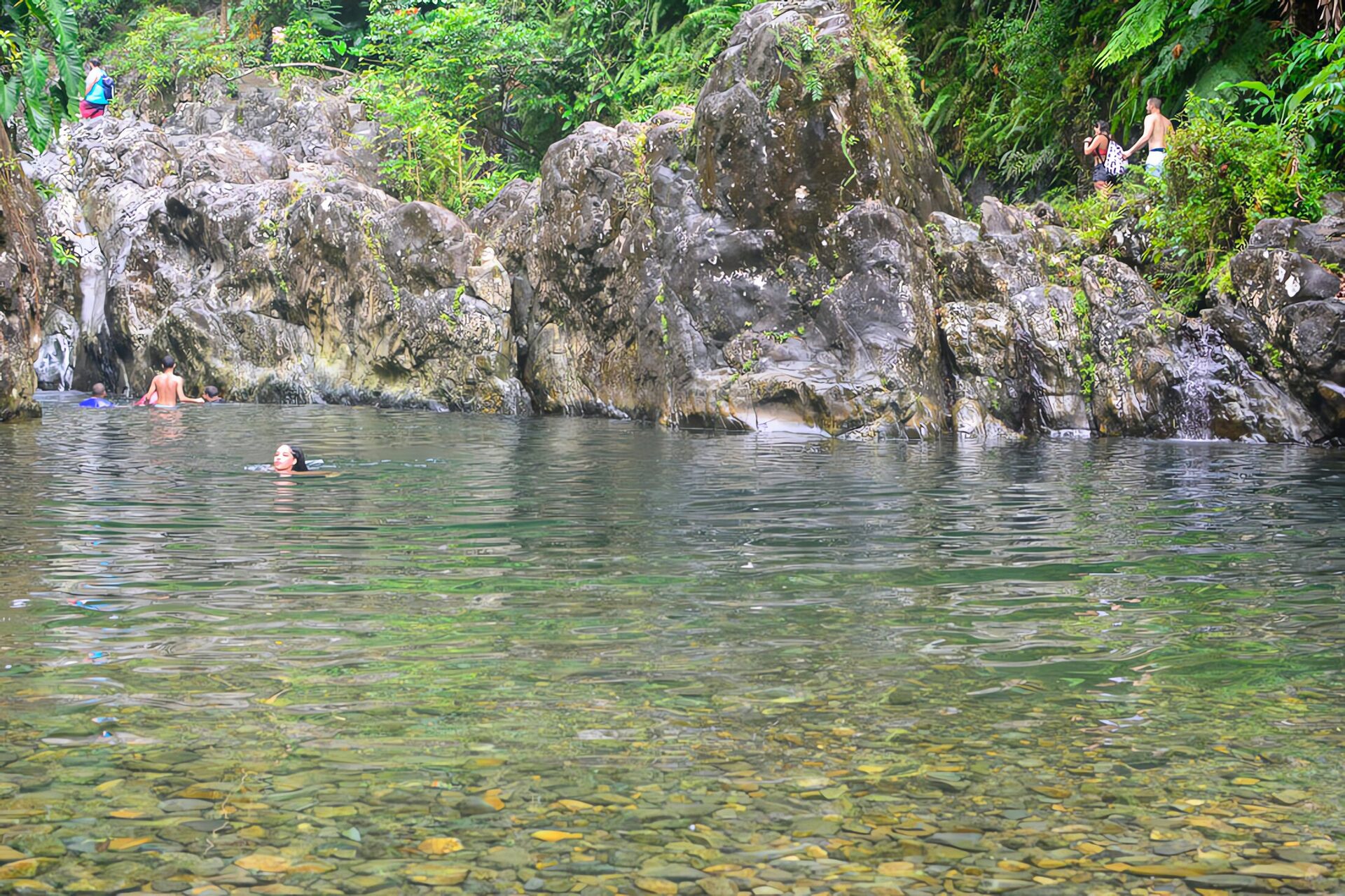
El Yunque trails involve river crossings, slick mud, and a long stretch in the water itself near the slides and jumps. Hiking boots fill with water, take 24 hours to dry, and turn into 2-pound bricks on your feet. We have watched dozens of guests struggle with them. Water shoes (Keen, Merrell Hydro, or any cheap pair from a pharmacy) drain fast and grip wet rock.
The cotton trap
Cotton absorbs water and holds it against your skin for the rest of the day. In tropical heat that is not dangerous, just deeply uncomfortable. Any synthetic fabric (polyester, nylon, quick-dry blends) works. Most athletic wear from the last decade is already this material — you probably own what you need.
What the rainforest really demands
- Dry bag (10–20L): keeps phone, wallet, car keys dry while you swim and jump. Cheap on Amazon.
- Water bottle: the hike is humid — you sweat more than you notice. We carry extras but bring your own.
- Sunscreen: even under canopy, river sections have direct sun. Reef-safe is the right etiquette here.
- DEET 25–40%: mosquitoes peak August-October but exist year-round. Picaridin works too.
- Towel + spare clothes: left in the vehicle. You will be soaked at end of trip; the ride to your hotel feels much better dry.
Things people overpack
Rain ponchos: you will be wet from swimming anyway. Hiking poles: trail does not need them. GoPro chest harnesses: nice to have but our guides take photos of every guest — you do not need extra gear. Snorkel masks: the river is fresh water and the visibility is from above, not below.
For kids and older guests
Same rules apply, with one addition: kids do better with a long-sleeve UV shirt (rashguard) because they spend more time in the sun on rocks between jumps. Older guests sometimes prefer trekking sandals with a closed toe (Keen H2 or similar) over water shoes for ankle support on the descent.
When in doubt: dress like you are going to a tropical river. Because that is exactly where you are going.